Hüseyin Yanar
Hüseyin Yanar
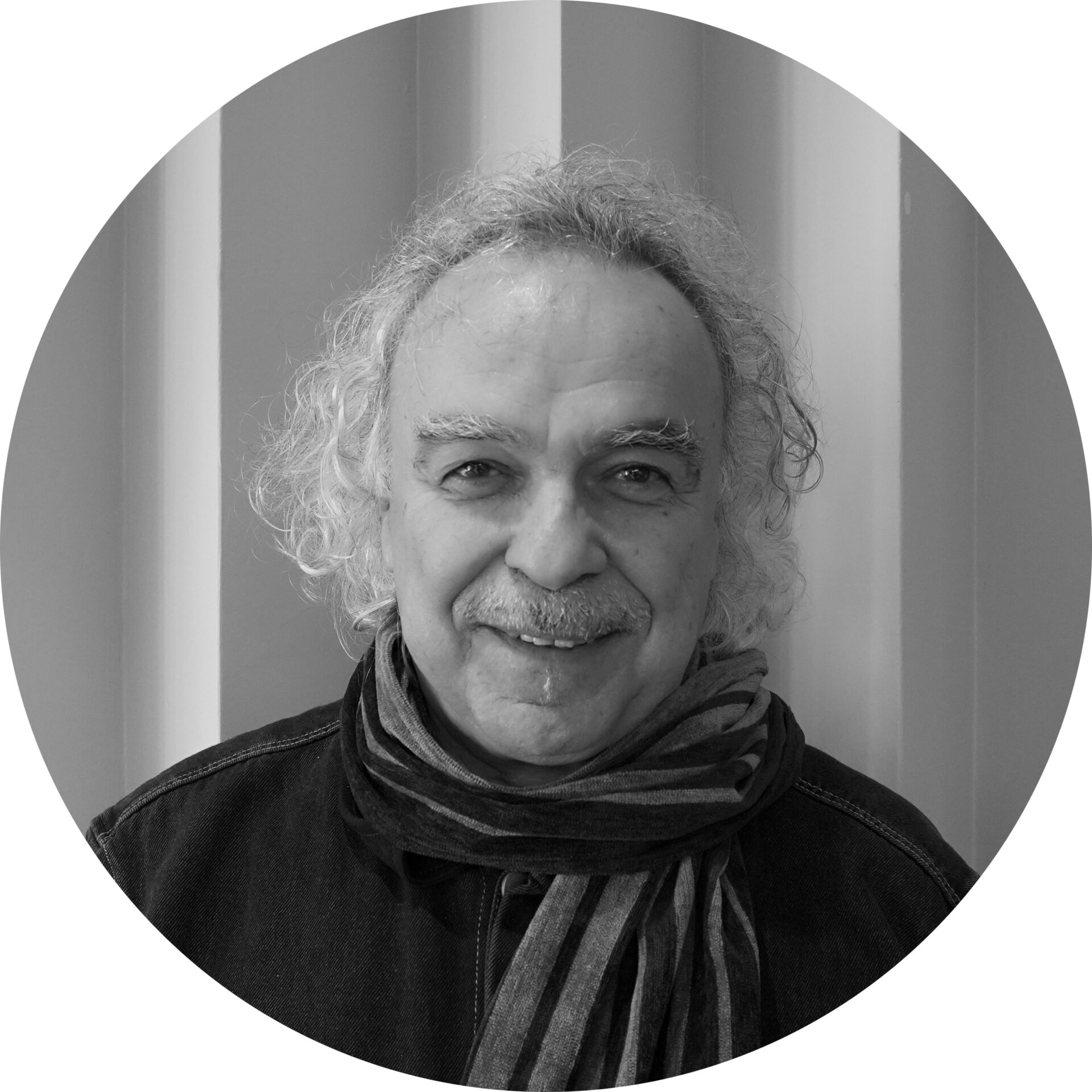
Mimar, yazar, akademisyen, Finlandiya
Sanat ve Mimarlık: S I N I R L A R
1- Ağacım: Çizdiğim en büyük ağaçtı. Oxford kentini anlatıyordu. Dev bir masada, altı gözüken büyük bir eskiz kağıdına kentin büyütülmüş, vaziyet planının üzerine kalın bir eskiz kalemi ile çizmiştim. Yaşadığım her ülkeden seçtiğim ve zaman zaman gidip ziyaret ettiğim özel ağaçlarla, biri diğerine bağlanmış ve hep birlikte dev bir ağaç olmuştuk. Yaşamın değiştiği ülkeler ve sınırlar arasında bir atlama taşıydı bu dev Oxford ağacı ve sonrasındaki kardeş ağaçlar arasında.
1- My Tree: It was the largest tree I had ever drawn. It depicted the city of Oxford. At a huge table, I had drawn the enlarged site plan of the city on a large sketch paper with a thick pencil. With the special trees I chose from every country I lived in and visited from time to time, we were connected to each other and together we became a giant tree. This huge Oxford tree was a stepping stone between the countries and borders where life changed, and between the brother trees that followed.
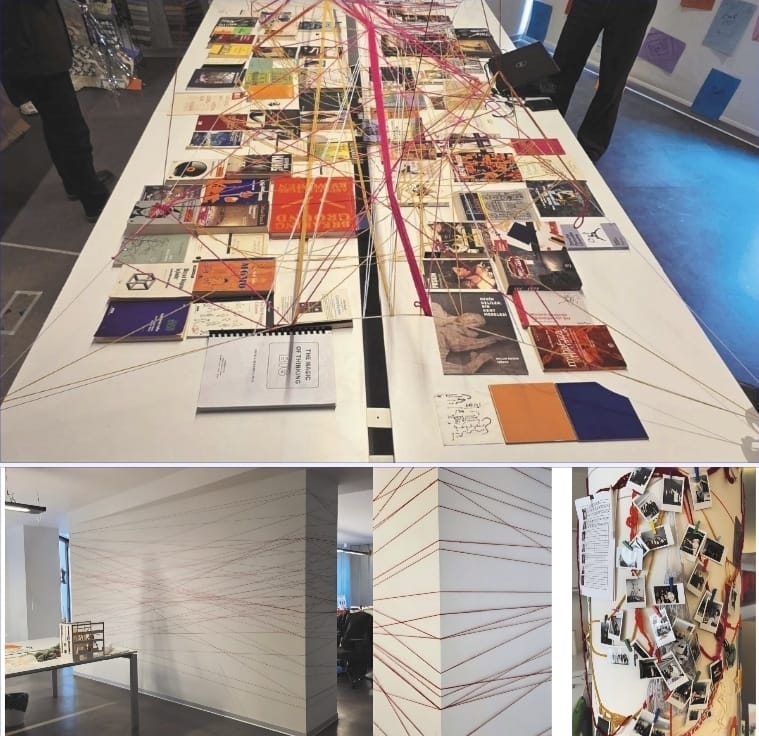
2- Atölyemiz: Bir Duvar, Bir Kolon ve Bir Masa: Bizim mekânımız steril, pırıl pırıl olmamalıydı. Hepimizin hissettiği bir yer olmalıydı, yaptıklarımız da her yanımızı sarmalıydı. Süreç aşamasında seçilmiş en iyi parçalarla sergileme fikri bir yana bırakılmış dokunuşlarımızı, doğrularımızı, yanlışlarımızı gösteren köşeler oluşturmaya fikrine düşündürmüştü. Sanki sonunda kimbilir ne hale evrilecek atölyemizin taşları farkında olmadan döşenmeye başlamıştı.
2- Our Atelier: A Wall, A Column and A Table: Our space should not be sterile and sparkling clean. It should be a place we all felt connected to, and our work should envelop us. The idea of exhibiting the best pieces selected during the process was set aside, giving way to the idea of creating corners that showed our touches, our truths, and our mistakes. It was as if the stones of our workshop, unaware of what form it would eventually take, had begun to be laid.
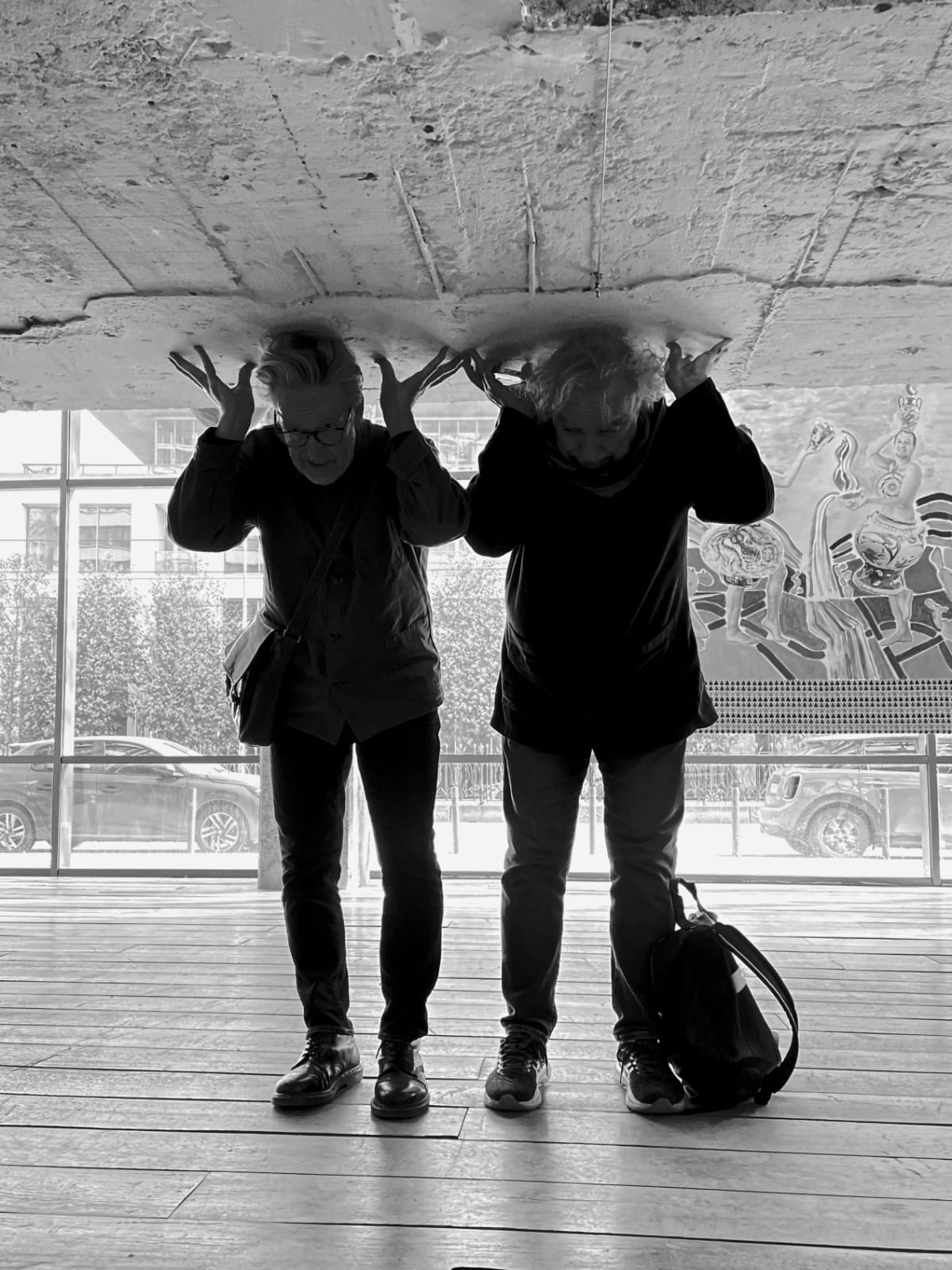
3 – Karyatidler: Seppo geldiğinde 18. İstanbul Bienali vardı. Öğrenci arkadaşlarla birlikte bazı sergilere gitmiştik. En sonuncusu Meclisi Mebusan 35’teydi. Fuayenin iç tarafında sergi bölümlerine bakan galerinin yanındaki tavan oldukça basıktı. Seppo ile yan yanaydık. Karşılıklı bir şeyler hakkında sohbet ederken sanki sözleşmişçesine birlikte ikimizin de ellerimiz kalktı ve üzerimizdeki katı, katları hatta binayı parmak uçlarımızda taşımaya başlamıştık. Kentteki duruşumuz, nerede olduğumuz bu anlık ve spontane ikili performansımız ile hayat bulmuştu.
3- Caryatids: When Seppo arrived, the 18th Istanbul Biennial was taking place. We had gone to see some exhibitions with our student friends. The last one was at Meclisi Mebusan 35. The ceiling next to the gallery overlooking the exhibition sections on the inside of the foyer was quite low. Seppo and I were standing side by side. While chatting about something, as if by mutual agreement, we both raised our hands and began to carry the floor above us, the floors above that, even the building itself, on our fingertips. Our stance in the city, where we were, had come to life with this spontaneous, momentary, dual performance.
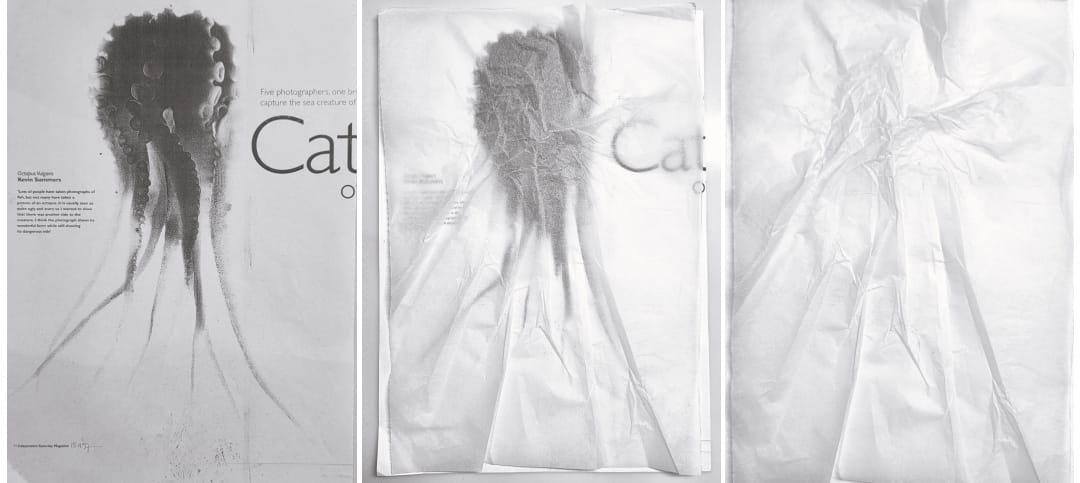
4- Arkadaşım Ahtapot: Yıllar önce aynı başlıkla ve yukarıdaki alıntının da içinde olduğu makalesi yazdığım “Arkadaşım Ahtapot” Beşiktaş’a da geldi… Bu çarşı tam anlamıyla aramızda tartıştığımız gibi tam bir ahtopota benziyordu. Üstelik ahtapot da çok özel ve mimarlık, sanat ve yaşam adına kendisinden çok öğrenilebilecek bir yaratıktı. Kendisi hep birlikte izlediğimiz “Öğretmenim Ahtapot” filmi ve ardından yaptığımız sohbetler ve çalışmalarla “Sınırlar” Atölyesi’nin çok önemli bir aktörü oldu.
4- My Friend Octopus: Years ago, my article titled ‘My Friend the Octopus,’ which included the above quote, also came to Beşiktaş… This market was exactly like an octopus, just as
we had discussed among ourselves. Moreover, the octopus was a very special creature from which much could be learned in terms of architecture, art, and life. It became a very important actor in the ‘Borders’ Workshop through the film ‘My Teacher the Octopus,’ which we watched together, and the conversations and work we did afterwards.
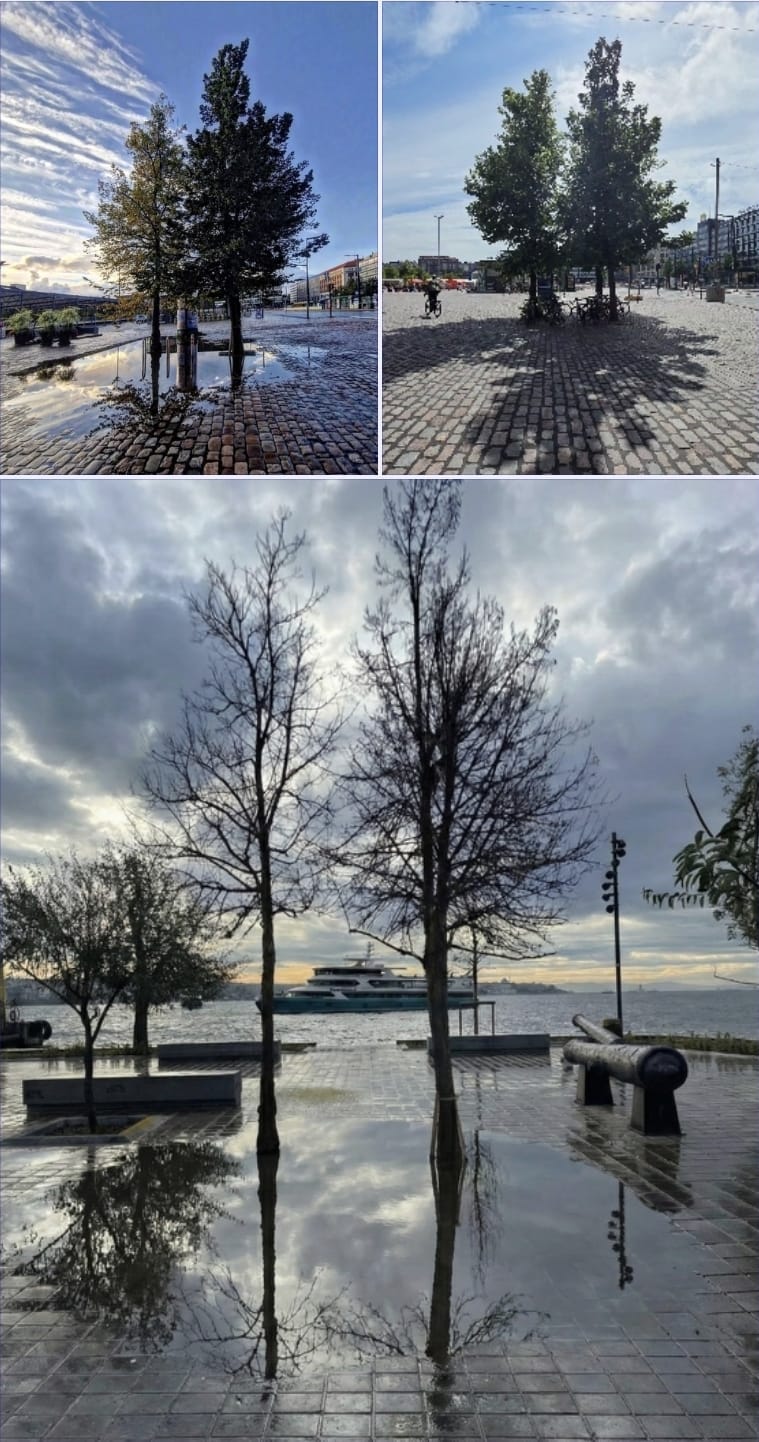
5 – Kuzey ile Güney: Helsinki Hakaniemi’de / İki arkadaş ağaç vardı / Tam da meydanın / Bir kenarındaydı / Altına bisikletler / Roller skates konmuştu / Yağmur yağınca
Orası su doluyordu / Ortaya doğru çökük / Yuvarlağa benziyordu / Paket taşlarıyla / Kendiliğinden eğimliydi / Benzer hali ile / Deniz kenarına / Hakaniemi’den Beşiktaş’a / Boğazın taa kıyısına geldi / Kısacası kuzey güney el eleydi / Hepsi bir oldu, tek oldu, yolda…
5- North and South: In Helsinki Hakaniemi / There were two tree trunks / Right on the edge / Of the square / Bicycles and roller skates / Had been placed underneath them / When it rained / The area would fill with water / It was sunken towards the centre / Resembling a circle / With paving stones / Forming a natural slope / In a similar state / It reached the seaside / From Hakaniemi to Beşiktaş / Right to the edge of the Bosphorus / In short, north and south were hand in hand / They all became one, united, on the road…
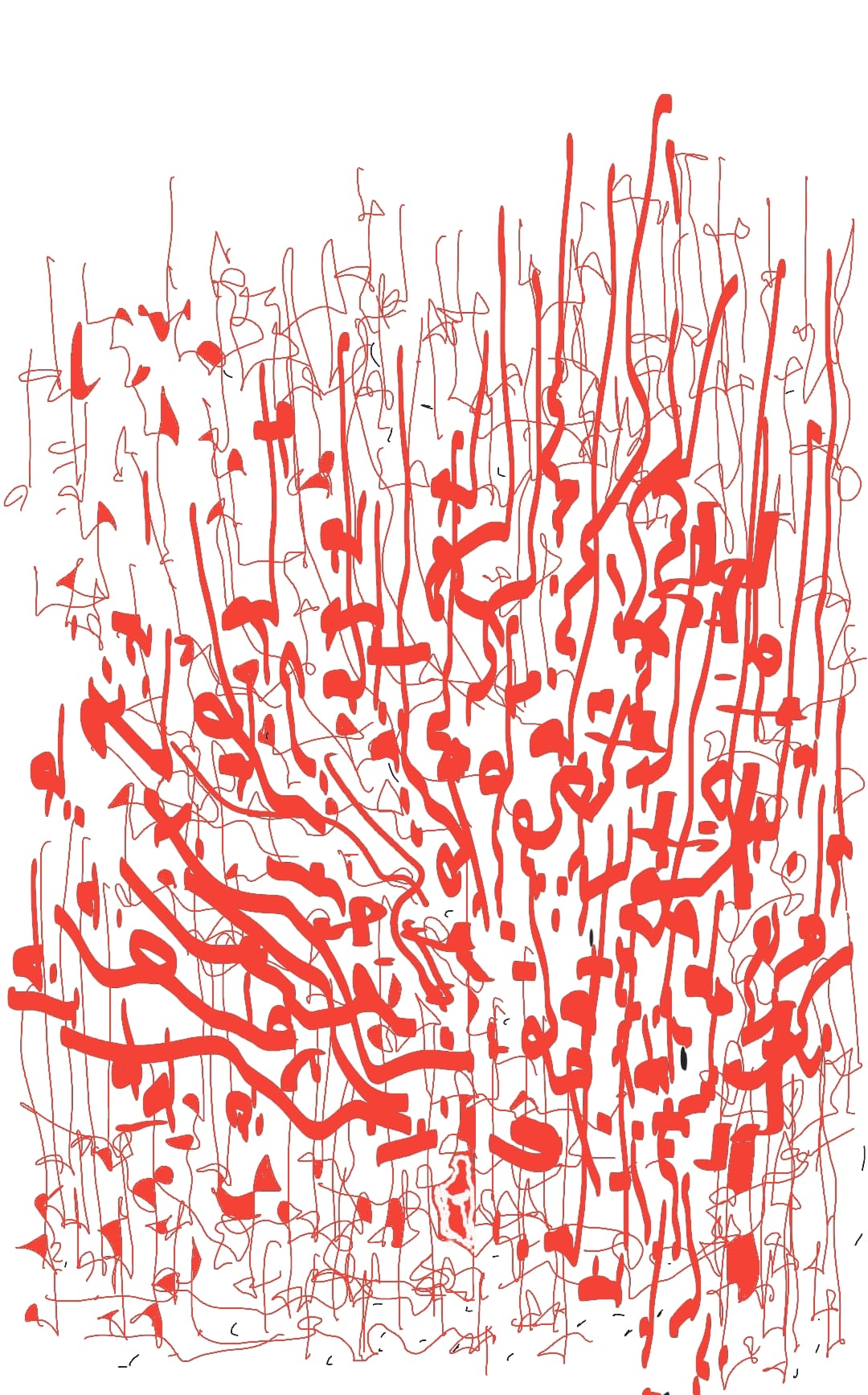
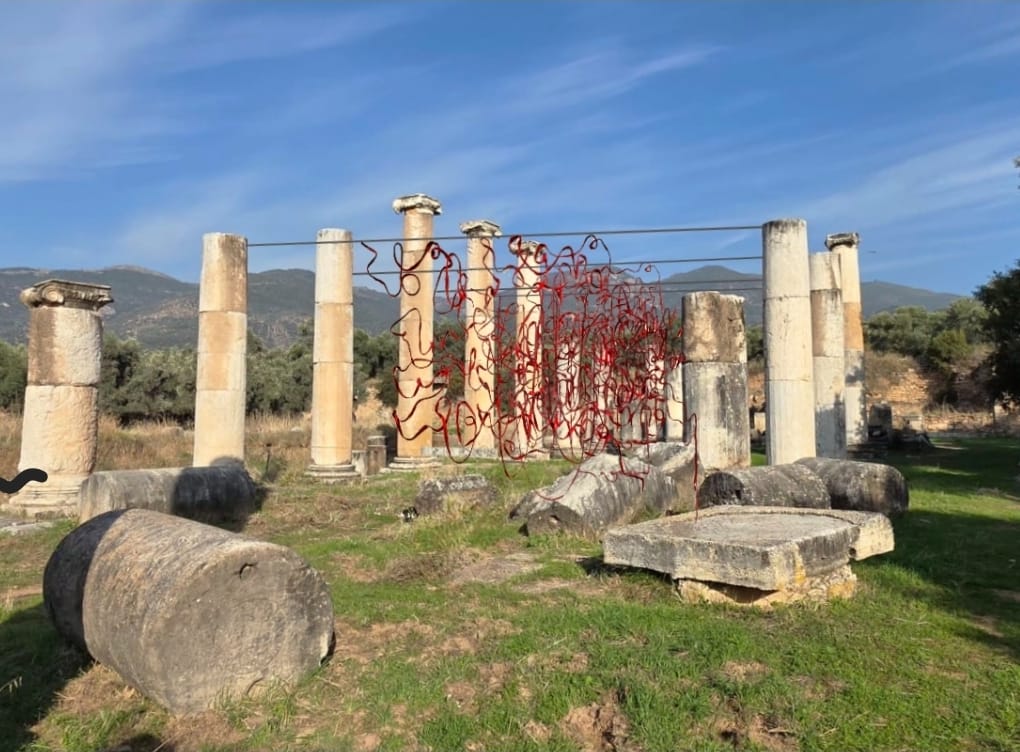
6 – Nysa Kırmızısı: Helenistik dönem agorası ve orada sıralanan ikili, dizi dizi mermer kolanlar bir aradalıklarıyla çok etkili gelmişti o mermerlerin arasında. Kırmızı da bu antik kente sanki çok yakışıyordu. Çizgilerimi o kolonların üzerine bir baştan bir başa asmak istedim. O eski dönemleri, agorada dolaşanları, bu kırmızılara bakarak sohbet edenleri, oradaki günlük hayatı aklımdan geçirdim. Kolonların arasında aşağı sarkan kıpkırmızı çizgiler benim Nysa’m olmuştu.
6- Nysa Red: The Hellenistic-period agora and the rows of twin marble columns lining it made a powerful impression amidst all that marble. Red seemed to suit this ancient city perfectly. I wanted to drape my lines from top to bottom over those columns. I imagined those ancient times, the people wandering the agora, chatting while gazing at the red, the daily life there. The bright red lines hanging down between the columns had become my Nysa.
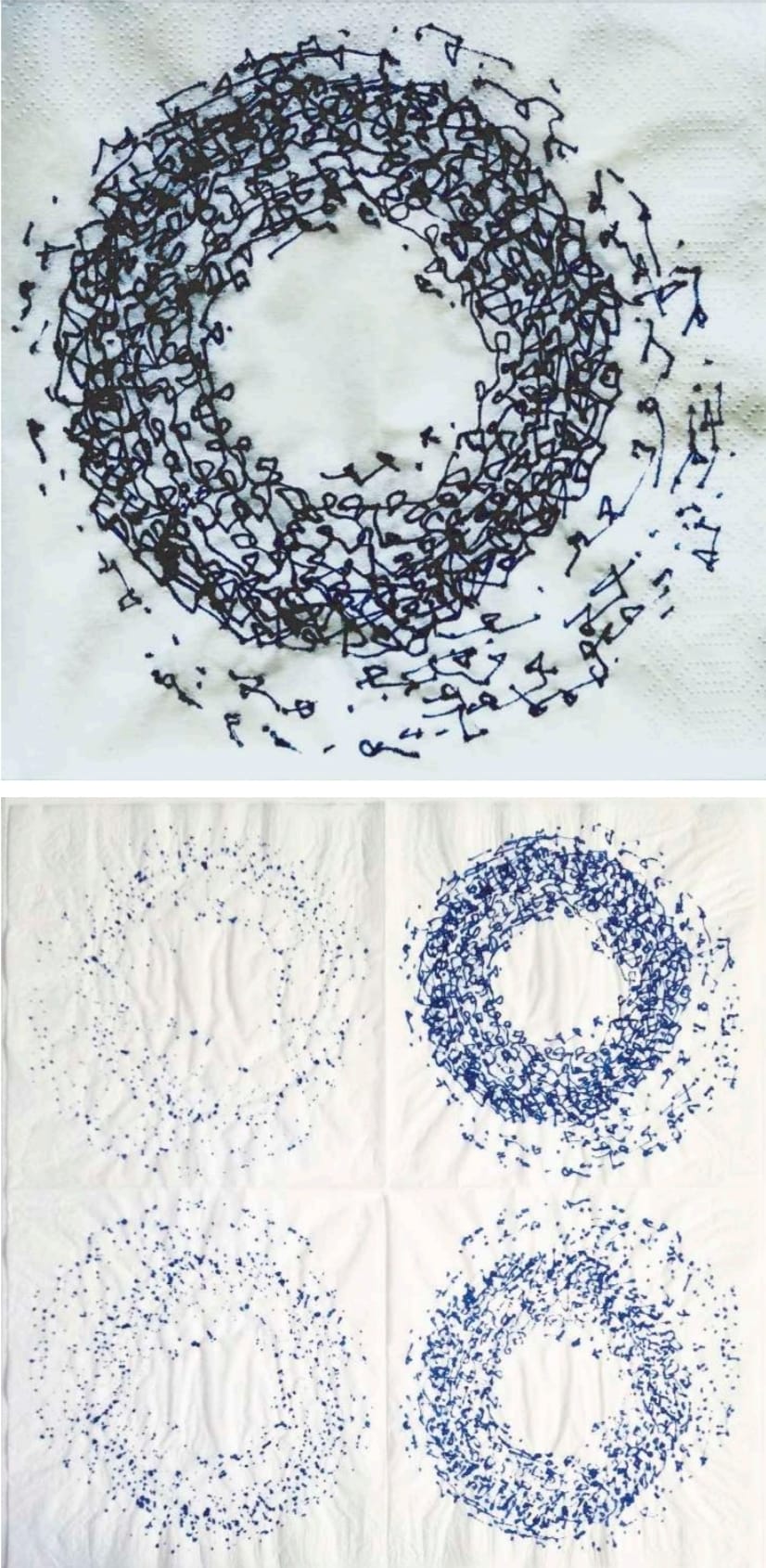
7 – Öğrenciler ile: “Arkadaşlık Çemberi”: Rüya gibi bir yerdi Gemlik. Hiç unutamadığım batan güneş ise çocuk kafamızda sanki dev bir umuttu. Çoğu zaman büyük törenlerle, inanılmaz seramonilerle güle oynaya her şeyi arkada bırakarak batardı. Her batışın ardından da aydınlık günlerin sıralanır dururdu. Oradaki yıllardan sonra sıraya diğer kentler, ülkeler, okullar, mimarlık, sanat ve beni adeta inşa eden akademisyenlik ile her ülkeden öğrenciler girdi ve adeta bir çember oluştu yıllar içinde, büyüye büyüye.
7- With Students: “Friendship Circle”: Gemlik was a dreamlike place. The sunset, which I can never forget, was like a giant hope in our childish minds. Most of the time, it would set with great ceremonies, incredible celebrations, leaving everything behind with laughter and joy. And after each sunset, bright days would follow. After those years there, other cities, countries, schools, architecture, art, and academia, which shaped me, came into the picture, along with students from every country, forming a circle over the years, growing and growing.
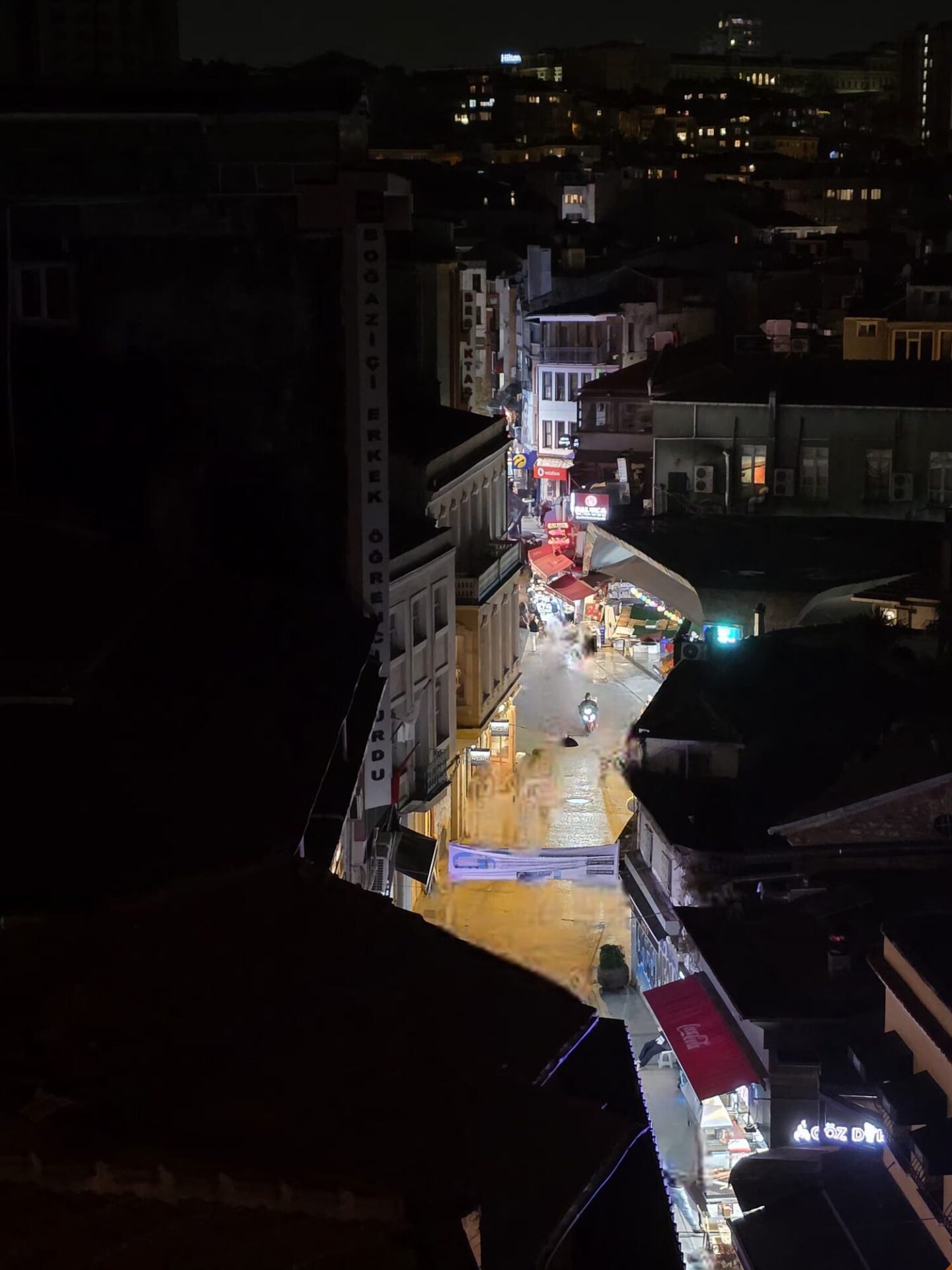
8 – Sınırlar ve Bitmemişlik: Ersilia ile Beşiktaş Arası: AURA’daki atölye öncesinde, çoğu kez Ortodoks Kilisesi’nin karşısındaki Nero’nun arka bahçesinde kahve içip güne başlamak çok önemliydi. Çarşı yolunda balıkçıların ötesinde, dört yol ağzındaki Kartal heykelini uzaktan görmek de, atölye bitince, çoğu zaman olduğu gibi, köy içindeki sürpriz dolu mekanları keşfetmek de. Beşiktaş Çarşısı’nın kalbinde yaşamak çok özel oldu. Maç günleri buraları dolduran kalabalığın sesleri arasında tribünlere tempo tutan o efsane “Çarşı herşeye karşı” sloganını hatırlayıp gülümsedim.
8- Boundaries and Incompleteness: Between Ersilia and Beşiktaş
Starting the day with coffee in Nero’s backyard opposite the Orthodox Church before the workshop at AURA was very important. On the way to the market, beyond the fishermen, seeing the Eagle statue at the crossroads from afar, and after the workshop, as was often the case, discovering the surprise-filled places within the village… Living in the heart of Beşiktaş Market was very unique. On match days, amidst the sounds of the crowds filling these places, I smiled
as I recalled that legendary chant echoing through the stands: ‘The Market is against everything.’